Looking for episodes to listen to on the go? You can also subscribe to the SOF/Heyman Bookshelf on Apple podcasts.
Explorations in the Medical Humanities events explore the enigma of how what we write relates back to the experience of bodies in different stages of health and disease. Our speakers consider how the medical and health humanities build on and revise earlier notions of the “medical arts.”
This series offers discussions, exhibitions, and performances to gather scholars, artists, students, curators, and educators who are working to bridge arts education, humanities research, and incarceration and, in the process, render visible the hidden histories of mass incarceration and radicalize arts pedagogies for a more just society.
Building Publics showcases how our Public Humanities Graduate Fellows bridge humanistic thinking with civic engagement and social justice, scholarly research with public building and communication in order to unleash new, more critical modes of scholarly imaginations. Each year highlights a new, pressing theme.
In the context of the global pandemic, these events maintain and reimagine a conversation long established among humanists and designers, social scientists and health experts, artists, artisans and planners: namely, a conversation on Care for the Polis--on the relationship between medical practices of care, cities, and their publics.
As the world grappled to deal with the fallout from COVID-19, this special series of workshops explored the impact of the pandemic on democracies worldwide. The workshops were organised by the Trinity Long Room Hub Arts and Humanities Research Institute in partnership with the SOF/Heyman..
A film and discussion series that explores architectural and territorial planning as instruments of social violence and the activists that use visual and narrative storytelling as a way to reclaim spatial rights
A forum for the discussion of books and ideas on justice, equality, and mass incarceration.
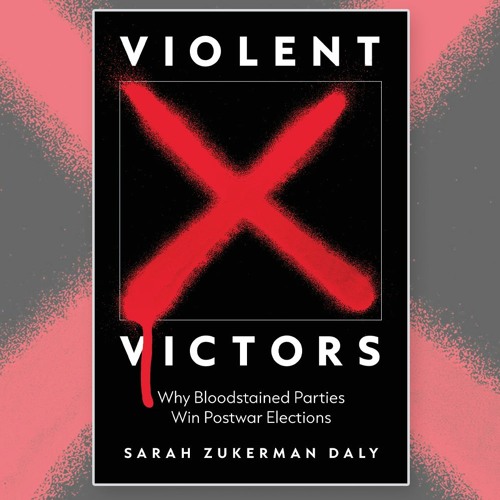
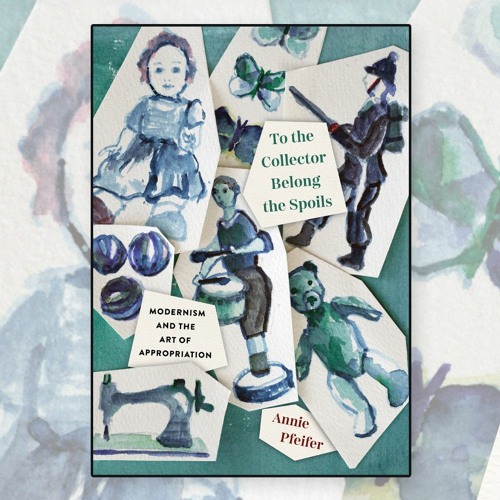
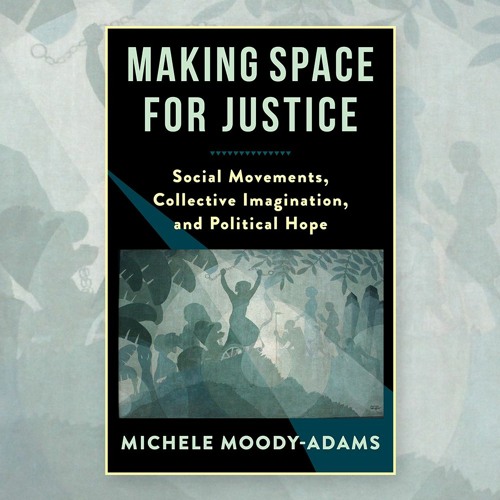
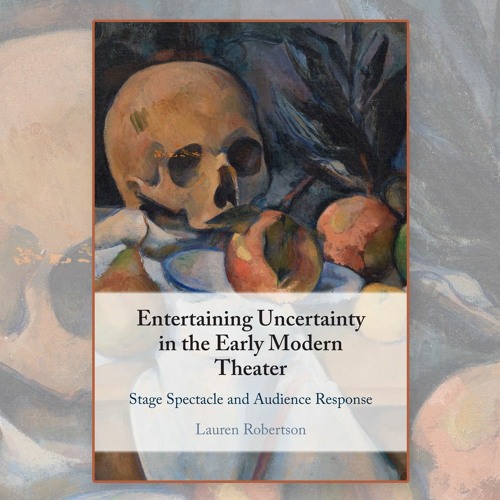
Panel discussions celebrating recent works by Columbia faculty in the Arts and Sciences
“Belongings” explores the capacious nature of belonging and belongings in various contexts with particular attention to the many ways in which its meanings intersect and interrogate the modern subject as a nodal point constituted by belongings: regimes of property; community and national identity; affective relationships and the desire to belong.
This lecture series offers a variety of disciplinary and methodological perspectives on the question of ambivalence as it relates to affects, effects, and operations of the aesthetic, modes of political action, forms of belonging, and regimes of governance.
This series is preoccupied with failure: the failure to address the climate crisis, to regulate capitalist greed, to ban guns, to repair systemic racism, to stop wars. Some benefit from these failures, others suffer. At the same time, failure can also be something systematic, structural, or inevitable is antithetical to the ethos of capitalism.
The social, political, and economic crises of our time demand urgent critiques of our normative orders that go hand-in-hand with radical alternative horizons. "Concessions" is here conceived as a site where foundational antagonism between norm and alternative unfolds, and thus brings to the fore mediations, contingencies, and compromises.
Speakable/Unspeakable is centrally about power and difference, what can be said, who can say it, where it can be said, and who, where, and what is worthy of being made speakable. But we also seek to historicize the formations that have dictated who, what, and which people, histories, and places have been erased and silenced, when not left out.
Pedagogy of the Deed aims to interrogate the pedagogic valences of action and the political value of pedagogy—not merely as topics for abstract reflection, but as modes through which humanities education might be reconstituted in the context of political crisis.
Re-energizing interdisciplinary conversations at Columbia about the climate emergency, at a moment when confronting the urgent and ever-growing challenges posed by global warming feels extraordinarily difficult.
Lionel Trilling (1905-75), one of Columbia's most celebrated faculty members, was among the great humanist scholars and public intellectuals of the 20th century. In his memory, the SOF/Heyman sponsors a series of intellectual conversations, known as the Lionel Trilling Seminars. Select video and audio of the series are available on our Media page.
Writing Home is an outgrowth of our popular Critical Caribbean Feminisms events, which have been bringing together established and emerging writers from the Caribbean and its diasporas since 2015. Episodes feature contemporary cultural actors in conversation with Kaiama L. Glover & Tami Navarro.
Being in the World: People and the Planet in French and Francophone Cinema
An interdisciplinary series exploring the relationship between climate justice, carbon tech, and climate futures. Climate scientists, engineers, anthropologists, science studies scholars, political ecologists, and historians connect to discuss justice-centered climate futures and engage defining issues of carbon tech/climate justice nexus.
Maison Française 2023 film festival
The Program in World Philology aims to unite Columbia and Barnard scholars across departments and schools around the discipline-based study of texts. Philology, defined over the course of its history as everything from text criticism to “slow reading” to “all erudition in language,” is at base the practice of making sense of texts.
The 2024 Maison Francais Film Festival with movies that all explore the concept of care, defined in a broad sense, through French and Francophone cinema.
A curated selection of essential films that challenge the status quo and offer rare insights into contemporary Russia.
The events in this series bring those writing in old and new genres to discuss lesser-known views into the life worlds and expressive practices of writers from Persophone West and Central Asia their works offer.
The film series presents five feature-length and three short films that were censored upon their release in France, Lebanon, or the United States – and often banned in other countries as well.